
LEADERSHIP IN ACTION: A CONVERSATION WITH DUNIOT
Recently, we sat down with Duniot Bienaime, one of Haiti Outreach’s exceptional staff members, to talk about the leaders who inspire him, his own journey of transformation, and what makes this work so meaningful.
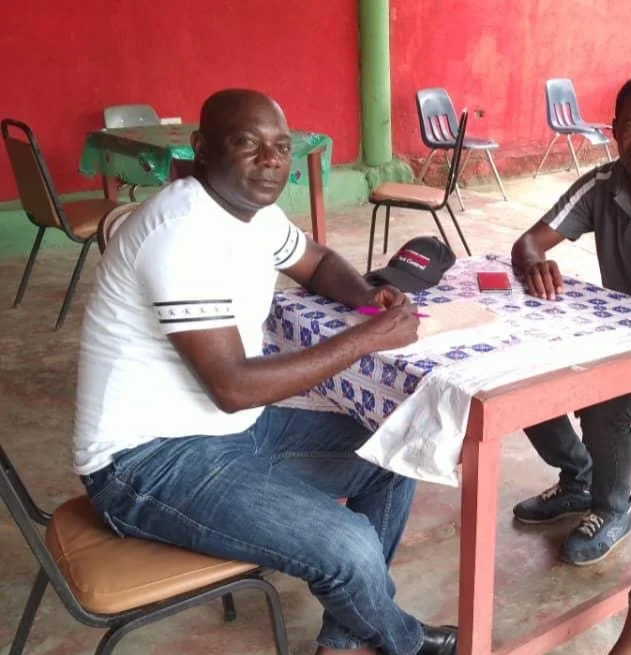
Duniot
Who is someone that comes to mind when you do this work—someone who really inspires you?
Madam Yvette. She is one of the mayors of Ferrier, and she is an absolute inspiration.
Her team has taken on coaching four communities. She herself has personally committed to coaching the community of Lewa. Because of this, she has five meetings every week—each one lasting about two hours.
Now, you need to understand something. She hasn’t been paid by the government in years. Years. So she is essentially volunteering her time for this work.
But here is the kicker: she lives outside the city. Getting to her meetings requires either a 2 hour walk or a 30 minute motorcycle ride. A motorcycle ride costs around eight dollars for a round trip. Many times, she simply cannot afford that, so she walks instead.
She survives with her family by keeping a garden with her husband. On top of all of this, she travels to Cap-Haïtien three times a week to care for her sick brother.
She shows up—not because she holds the title of mayor, but because she is a leader.
And remember, mayors in Haiti don’t have any kind of budget. It is nearly impossible to be strategic when you have nothing to work with. Mayors essentially have to figure out how to pay their own way. Even though citizens pay taxes, that money doesn’t go to local authorities.
She is the only mayor in Ferrier who is showing up. The only one creating anything.
The other mayors have actually locked up the municipal building so she can’t even hold meetings there. So she meets in a local school instead.
I always want to take my hat off to her. This is what public service should look like in Haiti.
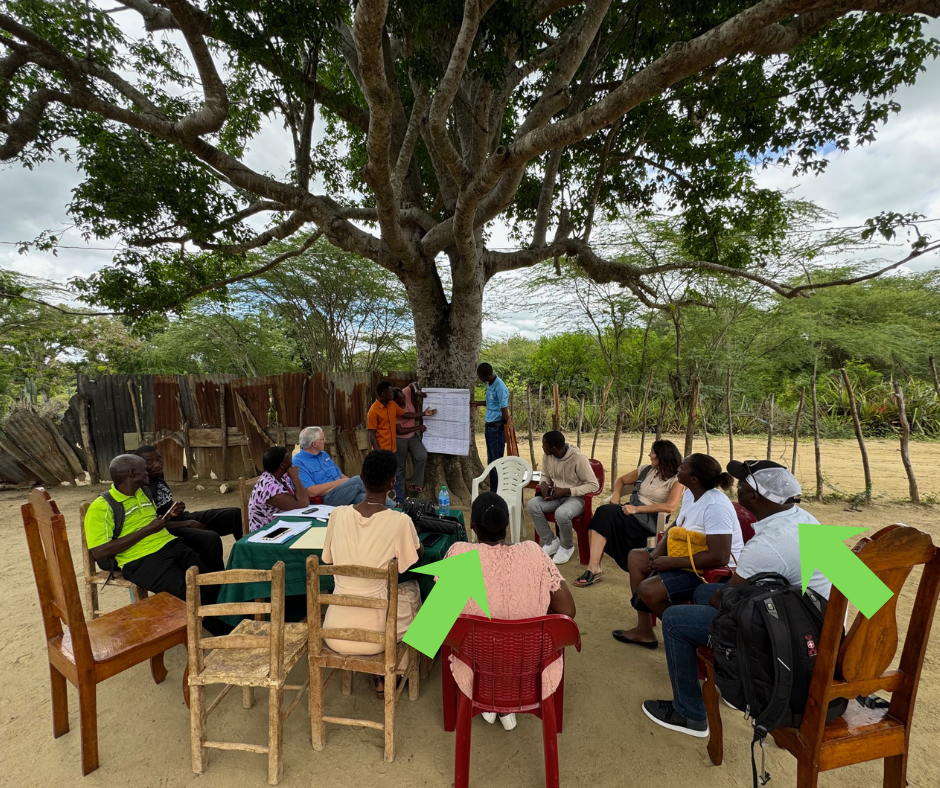
Duniot Yvette at a Community Meeting
That is amazing. She sounds like a wonderful leader. Tell us about when you first started at Haiti Outreach—and your own transformation.
[Duniot laughs]
When I first started being responsible for myself, my wife thought Haiti Outreach had drugged me because I was acting so different!
I was always hurrying to be on time. My wife, on the other hand, was always ten to fifteen minutes late. She would ask me, “Why are you always in such a rush?”
My mother-in-law had a stroke and lives with us. My wife teaches at a school, and she was always late because she was taking care of her mother in the mornings. But I said to her, “Being responsible would mean finding someone to help watch your mom in the morning so you can get to work on time.”
My wife used to use her mother as an excuse—which is the prevailing mindset in Haiti. There are always excuses, or what we call “reasons.” Everyone has a reason for why they can’t do something.
When she decided to find someone to watch her mom, everything changed. She is now on time. In fact, there is now a plaque at the school presented to her for being the most punctual teacher.
This is now having a ripple effect. The whole school is shifting toward wanting to be on time. She is changing the culture there.
Wow. I love hearing that. Tell me more about why being late is such a significant issue in Haiti.
Being late is the biggest excuse in Haiti. It permeates society. Nothing starts on time. This prevents progress.
To start caring about being on time is the lowest level of integrity a leader can begin to demonstrate—and then it builds from there. It’s a foundation.
For example, another leader who inspires me is Phamius. After the Haiti Outreach leadership training two years ago, he realized he had been very irresponsible and was always late. He had used that as an excuse his whole life, and he recognized he was out of integrity.
Now? He is on time to everything. He is usually the first one present.
This has helped him turn around his whole life. He didn’t take anything seriously before, and now he is a person of responsibility.
Lastly, what is your favorite part of your job?
The interactions. Even when they are difficult. Especially when they are difficult.
Field work is where it happens—not in the office. It is such a beautiful thing to see a person who is stuck become unstuck. To watch someone who has spent their whole life believing they can’t—believing the circumstances are too hard, the obstacles too great, the system too broken—suddenly realize that they have power. That they have agency. That they can make a different choice today than they made yesterday. Sometimes it happens slowly, over months of conversations. Sometimes you see it in a single moment—their eyes change, their posture shifts, and you know something has clicked. They stop making excuses and start making plans. They stop waiting for someone else to fix things and start asking, “What can I do?” That transformation—watching a person step into who they were always capable of being—that is why I do this work. That is everything.
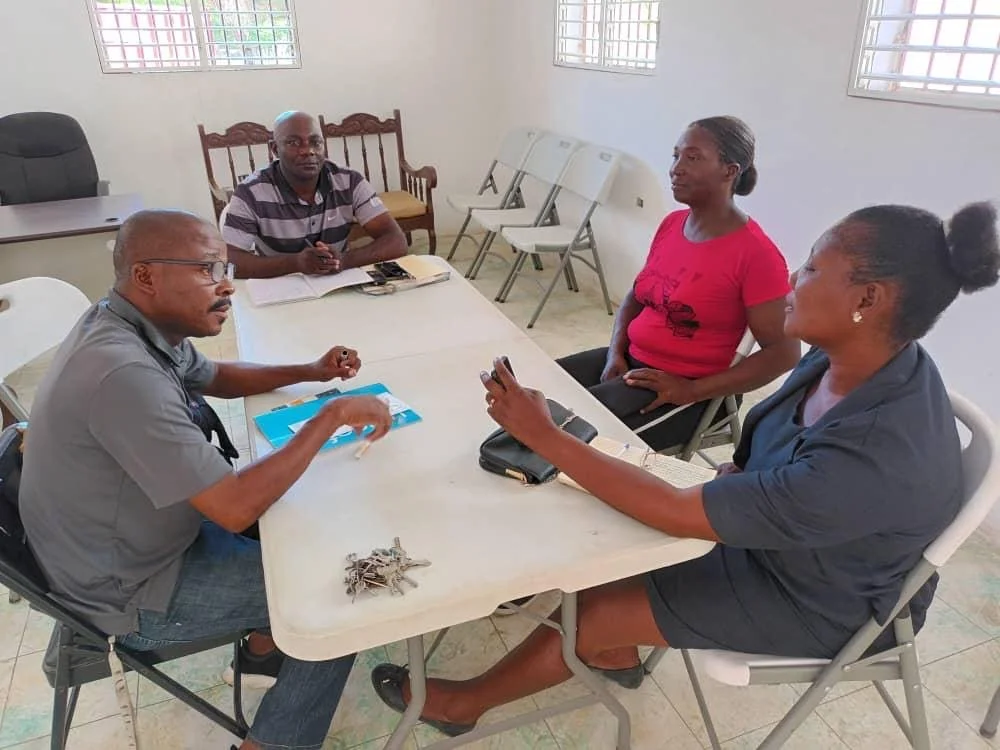
Duniot serves as a leadership coach with Haiti Outreach, working directly with community leaders across Haiti’s Northern and Northeast regions. Through Haiti Outreach’s distinctive coaching model, staff like Duniot walk alongside mayors, water committee members, and community volunteers—not to provide answers, but to ask the questions that spark transformation. In a country where decades of foreign aid have often created dependency rather than lasting change, this approach is radically different: it assumes that Haitian communities already have the wisdom and capability to solve their own problems. They just need someone to believe in them—and to hold them accountable to the leaders they’re capable of becoming. For Duniot, every field visit, every difficult conversation, every moment of watching someone move from “stuck” to “unstuck” is evidence that this model works. Leadership isn’t taught in a classroom. It’s forged in the daily choice to show up, to keep your word, and to believe that change is possible—one person, one community at a time.
